
Eco-friendly apple preservation is becoming essential as consumers demand healthier and more sustainable food choices. Fresh-cut fruit is convenient and popular. However, it also raises challenges. Specifically, producers need methods that keep apples safe and fresh without relying on chlorine-based sanitisers.
A New Approach from Italian Researchers
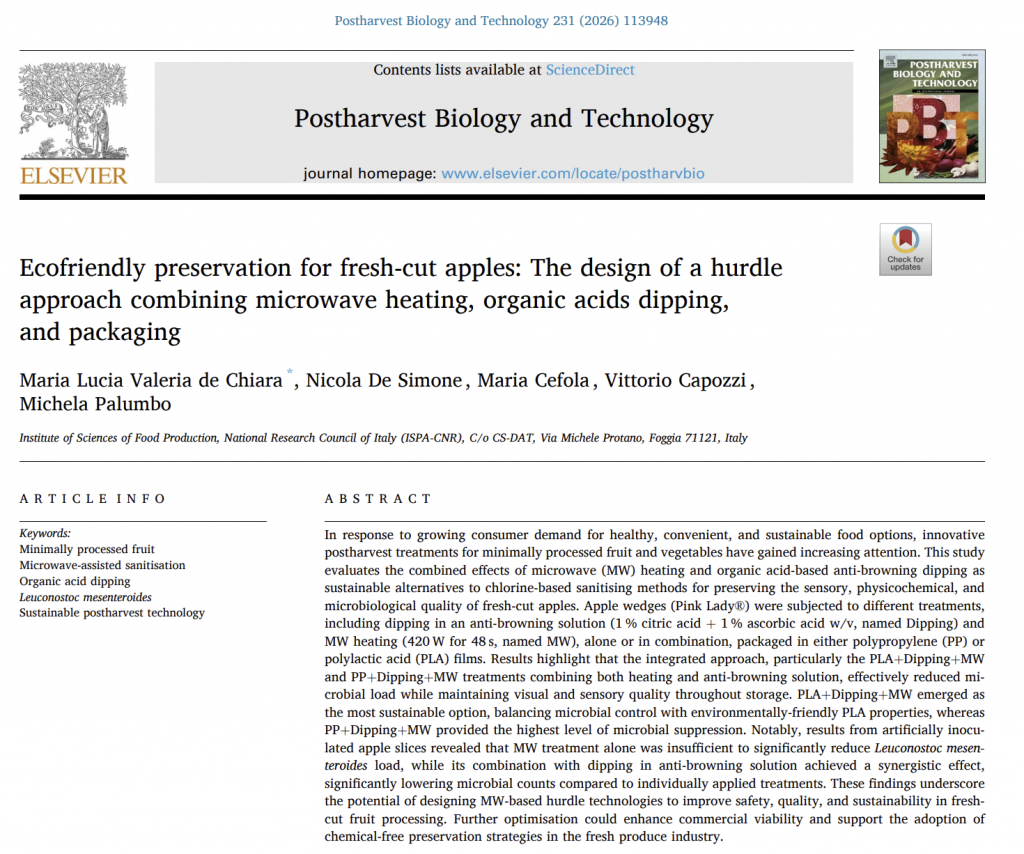
A new study from the National Research Council of Italy (ISPA-CNR) explores this challenge. Researchers Maria Lucia Valeria de Chiara, Nicola De Simone, Maria Cefola, Vittorio Capozzi, and Michela Palumbo tested innovative postharvest treatments for fresh-cut Pink Lady® apples. As a result, their findings point toward safer, chemical-free preservation methods.
Combining Microwave Heating and Organic Acids
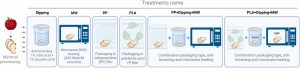
To begin with, researchers combined two sustainable techniques. They used microwave (MW) heating along with an anti-browning dip made from citric acid and ascorbic acid. Together, this dual approach replaces traditional chlorine-based sanitising methods.
In addition, the team tested different packaging materials. For instance, they compared polypropylene (PP) and polylactic acid (PLA) films to see which best preserved apple quality during storage.
Key Results and Findings
Overall, results showed strong outcomes for combined treatments. Specifically, the PLA+Dipping+MW treatment offered the best balance between microbial control and environmental sustainability. Meanwhile, the PP+Dipping+MW treatment achieved the highest microbial suppression.
However, microwave treatment alone wasn’t enough. For example, tests on apple slices inoculated with Leuconostoc mesenteroides showed that MW heating alone could not significantly reduce microbial load. By contrast, combining MW with organic acid dipping created a synergistic effect, ultimately leading to significantly lower microbial counts compared to either method alone.
Why This Matters for Sustainable Food Systems
Altogether, these findings highlight real potential for eco-friendly apple preservation methods. This research directly supports INTACTBioPACK’s mission to advance sustainable, bio-based packaging solutions for Mediterranean food systems. In particular, the use of PLA, a biodegradable material, alongside chemical-free sanitising methods like microwave hurdle technology aligns with our goal of reducing environmental impact across the food supply chain. To learn more about our work on sustainable packaging materials, visit our research page.
Reference: de Chiara, M.L.V., De Simone, N., Cefola, M., Capozzi, V., & Palumbo, M. Ecofriendly preservation for fresh-cut apples: The design of a hurdle approach combining microwave heating, organic acids dipping, and packaging. Institute of Sciences of Food Production, National Research Council of Italy (ISPA-CNR). Read the full article here.


