
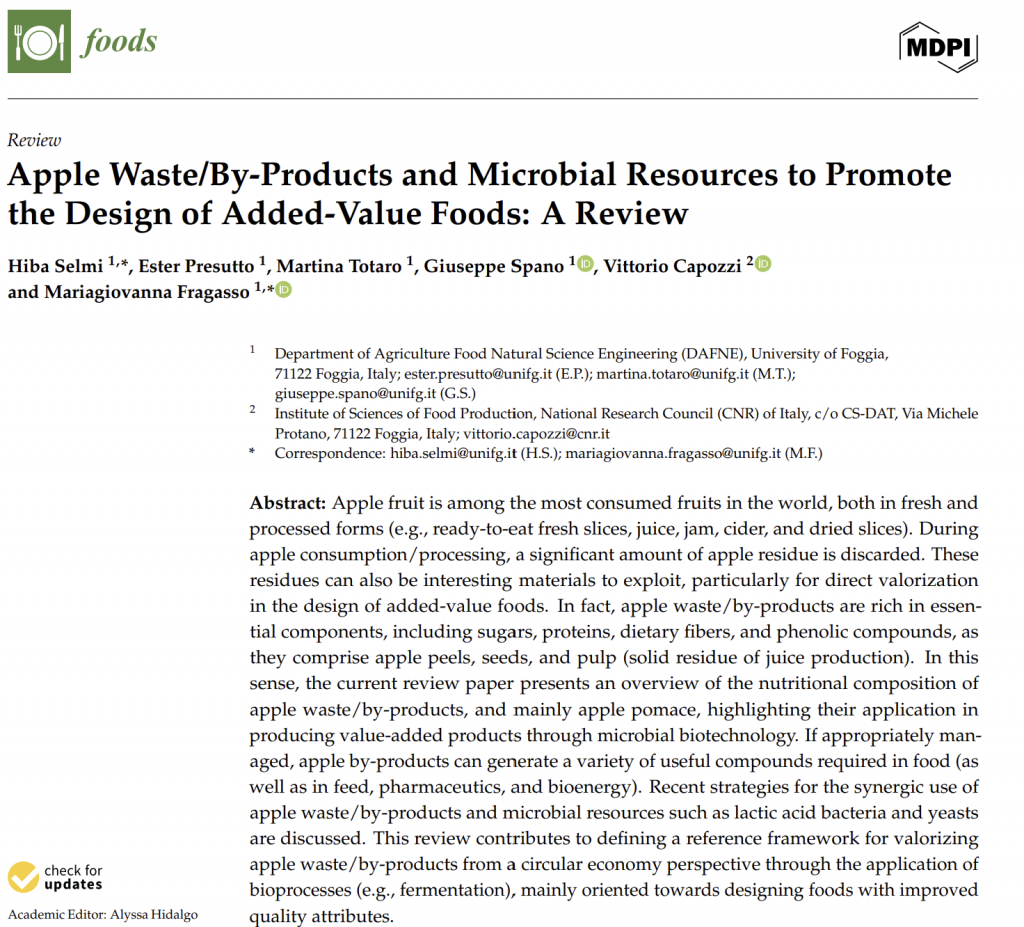
Apples are one of the most popular fruits in the world. People eat them fresh or enjoy them as juice, cider, jam, and dried snacks. But this popularity creates a problem. Apple consumption and processing generate large amounts of waste, including peels, seeds, and pomace.
A recent scientific review looks at this waste differently. Researchers Hiba Selmi and colleagues, from the University of Foggia and CNR Italy, show how apple by-products can become a valuable resource instead of discarded waste. Their work, published in MDPI’s open-access journal, offers practical insights for the food industry.
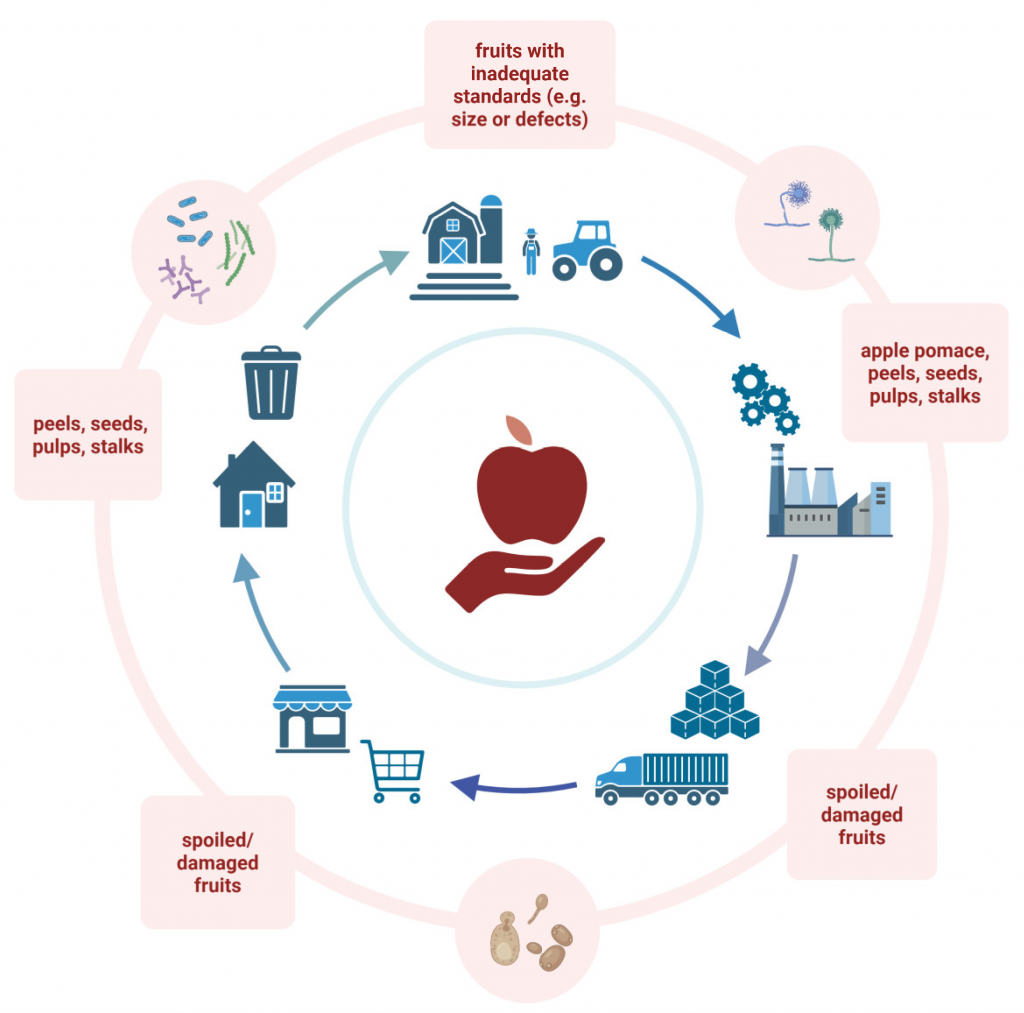
Key takeaways from the review:
Apple pomace is the solid residue left after juice production. It contains sugars, proteins, dietary fibers, and phenolic compounds. These properties make it a promising raw material for new food products.
Microbial biotechnology can unlock this potential. Fermentation using lactic acid bacteria and non-Saccharomyces yeasts transforms apple residues into functional ingredients.
Apple by-products offer benefits beyond food. Industries can also use them in animal feed, pharmaceuticals, and bioenergy production.
The study promotes a circular economy approach. It encourages industries to view fruit waste as a starting point for innovation, not an end-of-line problem.
This research supports INTACTBioPACK’s mission to promote sustainable, bio-based solutions across Mediterranean food systems. The project explores how fermentation and microbial science can repurpose agricultural residues like apple pomace. This reduces food waste and creates new, higher-quality food products. To learn more about our ongoing work in sustainable packaging and food systems, visit our research page.
Reference: Selmi, H., Presutto, E., Totaro, M., Spano, G., Capozzi, V., & Fragasso, M. Apple Waste/By-Products and Microbial Resources to Promote the Design of Added-Value Foods: A Review. University of Foggia (DAFNE) and CNR Institute of Sciences of Food Production. Read the full article here.


